Outdoor Wreaths and Garland That Look Custom, Not Catalog
A wreath on the door is the single most expected move in residential decor, and that's exactly what makes it so easy to get wrong.
Most people hang a wreath. Fewer people hang the right wreath, in the right size, as part of a considered composition that actually reads as intentional. The difference between those two outcomes is almost never budget. It's almost always execution.
The Most Common Mistake Is Hiding in Plain Sight
Go look at your front door and imagine a wreath that's four inches smaller than the one that belongs there. That's the wreath most homeowners buy. The default wreath size, the one that feels "normal" in a store aisle, is almost always too small for an exterior door.
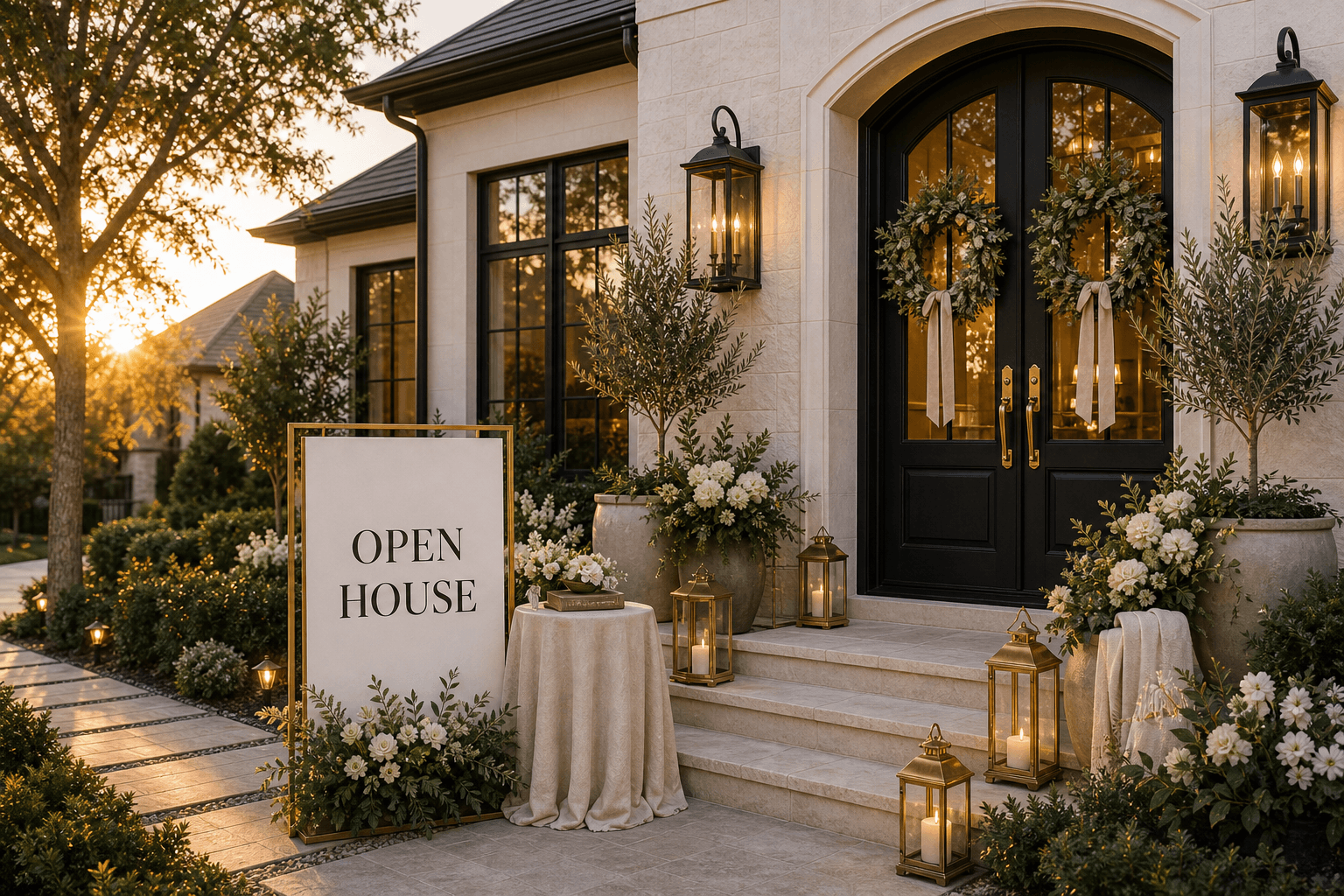
A standard 18-inch wreath on a 36-inch door disappears. It signals decoration without delivering it. The wreath should command the door, not apologize on it. For a standard entry door, 24 inches is a floor, not a ceiling. Double doors, arched entries, and oversized farmhouse doors can take 30 inches or more without reading as theatrical.
Scale is the first edit. Everything else builds on it.
A Wreath Is the Centerpiece, Not the Story
Here's the design principle that separates a styled entry from a decorated one: a wreath works as punctuation, not as a paragraph. It needs supporting elements to give it context.
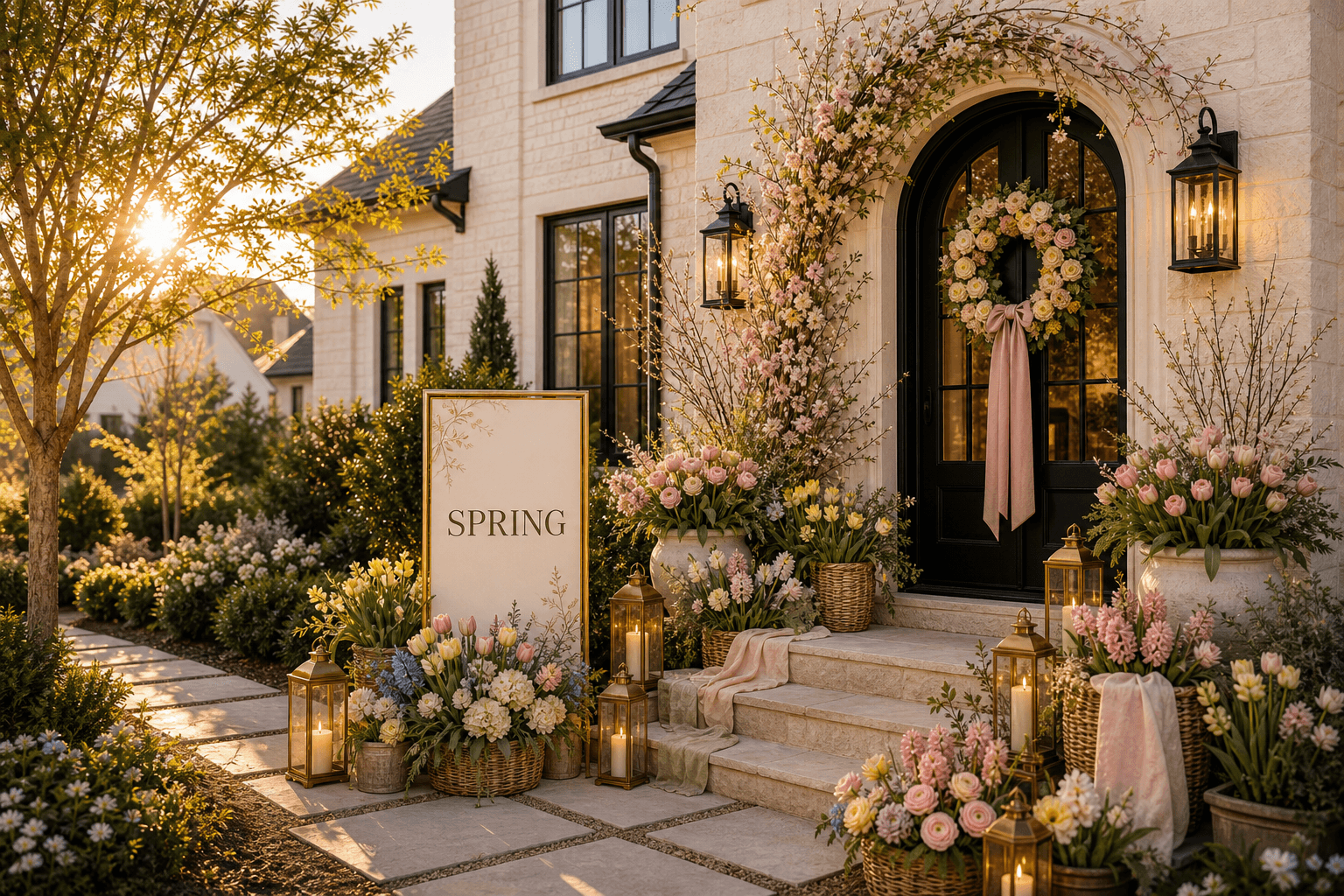
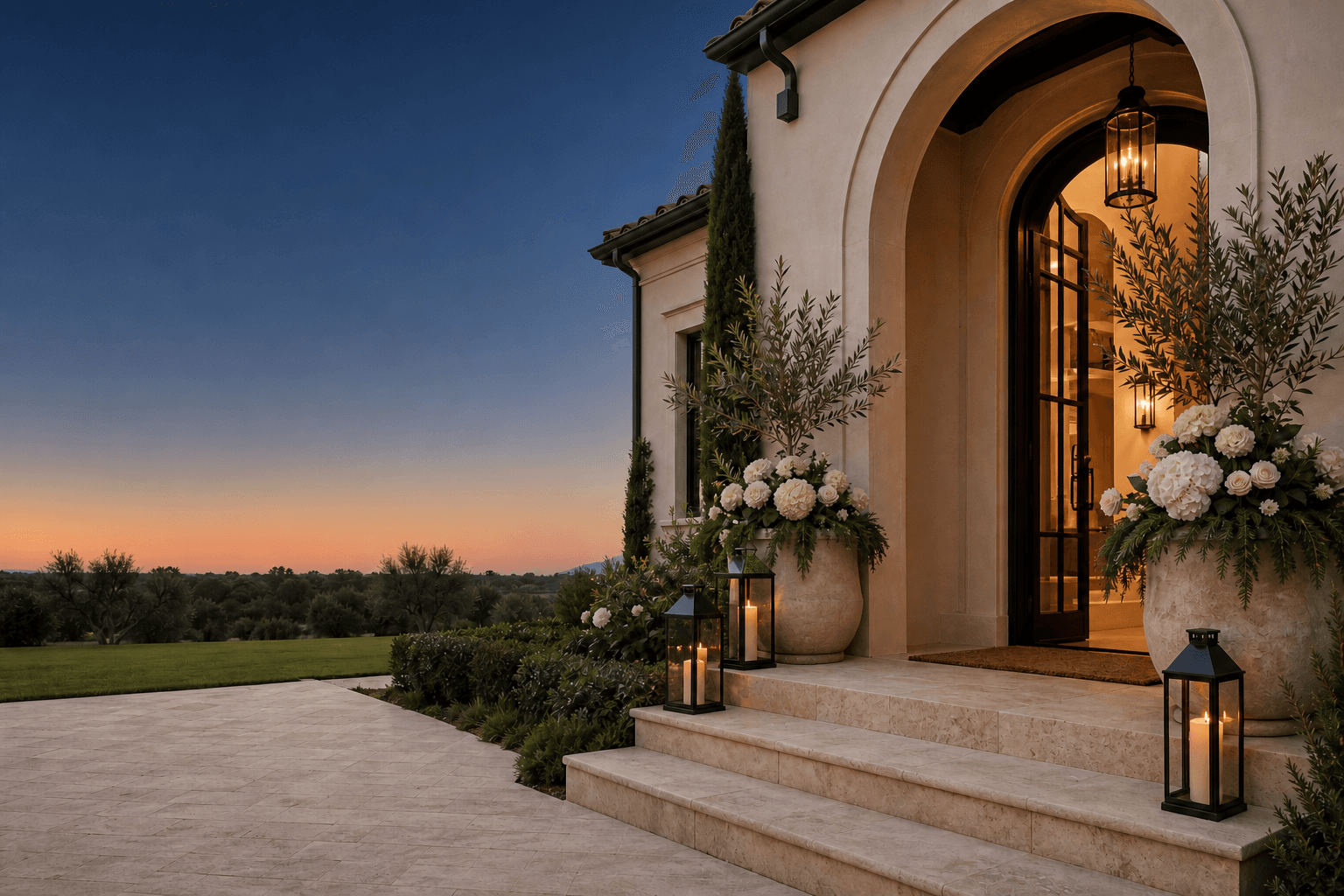
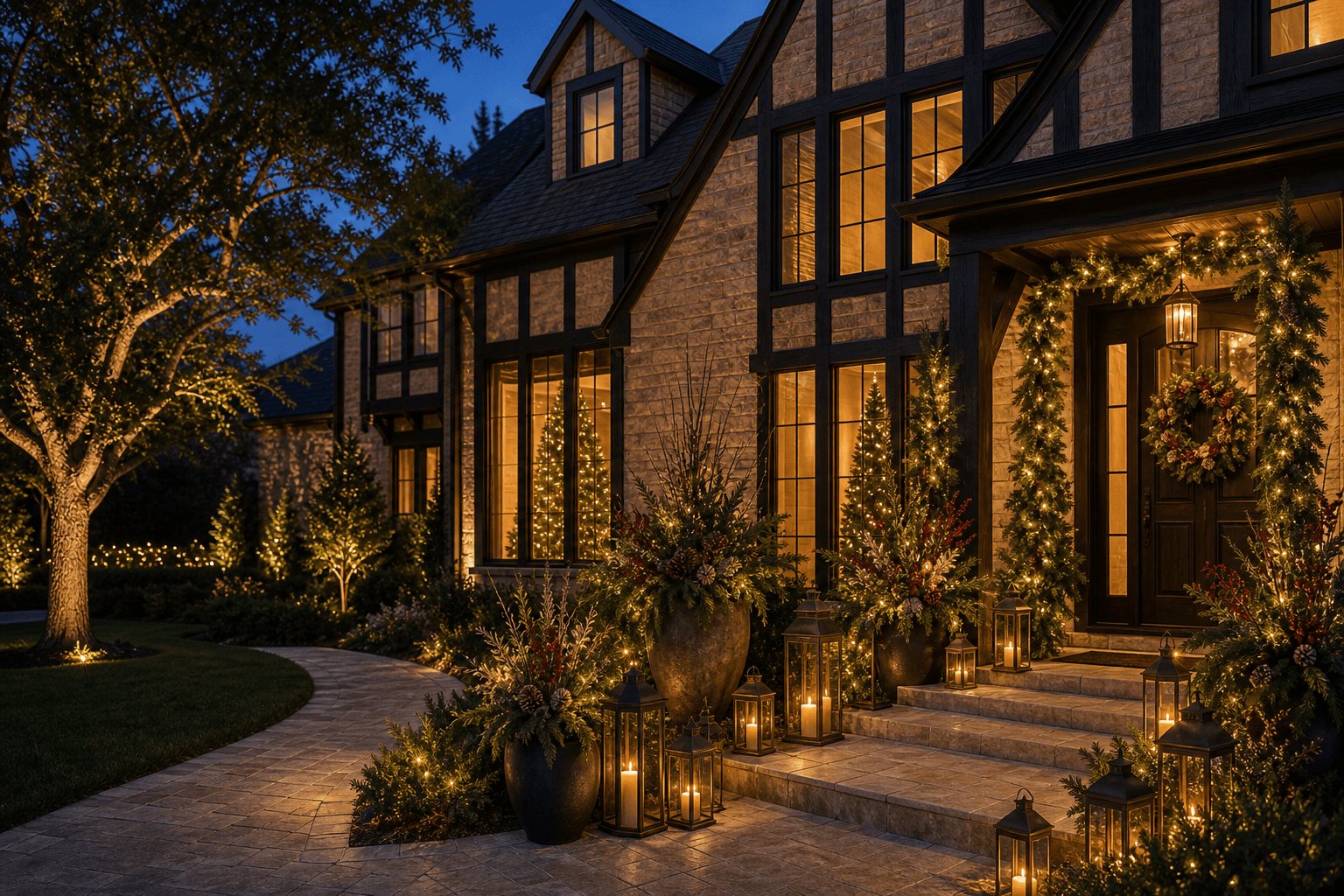
Flanking urns planted with seasonal greenery, a pair of lanterns anchoring the steps, garland draping a porch railing, these elements create a composition, not just a decoration. The wreath becomes the focal point because the eye has somewhere to travel first. Without that visual path, even a beautiful wreath just floats on the door.
Think of your front entry as a stage. The wreath is center stage. Everything else is set design.
What Your Materials Are Actually Saying
Material quality is legible from the street. Not in a technical way, guests aren't appraising your spruce tips, but in the aggregate, high-quality materials read as intentional and low-quality materials read as afterthought. The brain picks this up without being asked.
Fresh greenery, when it's well-sourced and properly conditioned, has a texture and depth that's immediately apparent. High-quality artificial, the kind with varied stem gauges, realistic color variation, and UV-stabilized construction, can achieve a similar effect and outperforms fresh in longevity. What doesn't work is the uniformly bright, plasticky faux garland that's been a staple of big-box seasonal aisles for twenty years. It reads as effort in the wrong direction.
The goal is materials that look like someone made a decision, not materials that look like someone found a deal.
The Same Base, Four Seasons
A well-built wreath form doesn't need to be retired at the end of its primary season. The base, a quality mixed evergreen wreath or a neutral grapevine form, becomes a platform. Swap the accent elements and the piece shifts with the calendar.
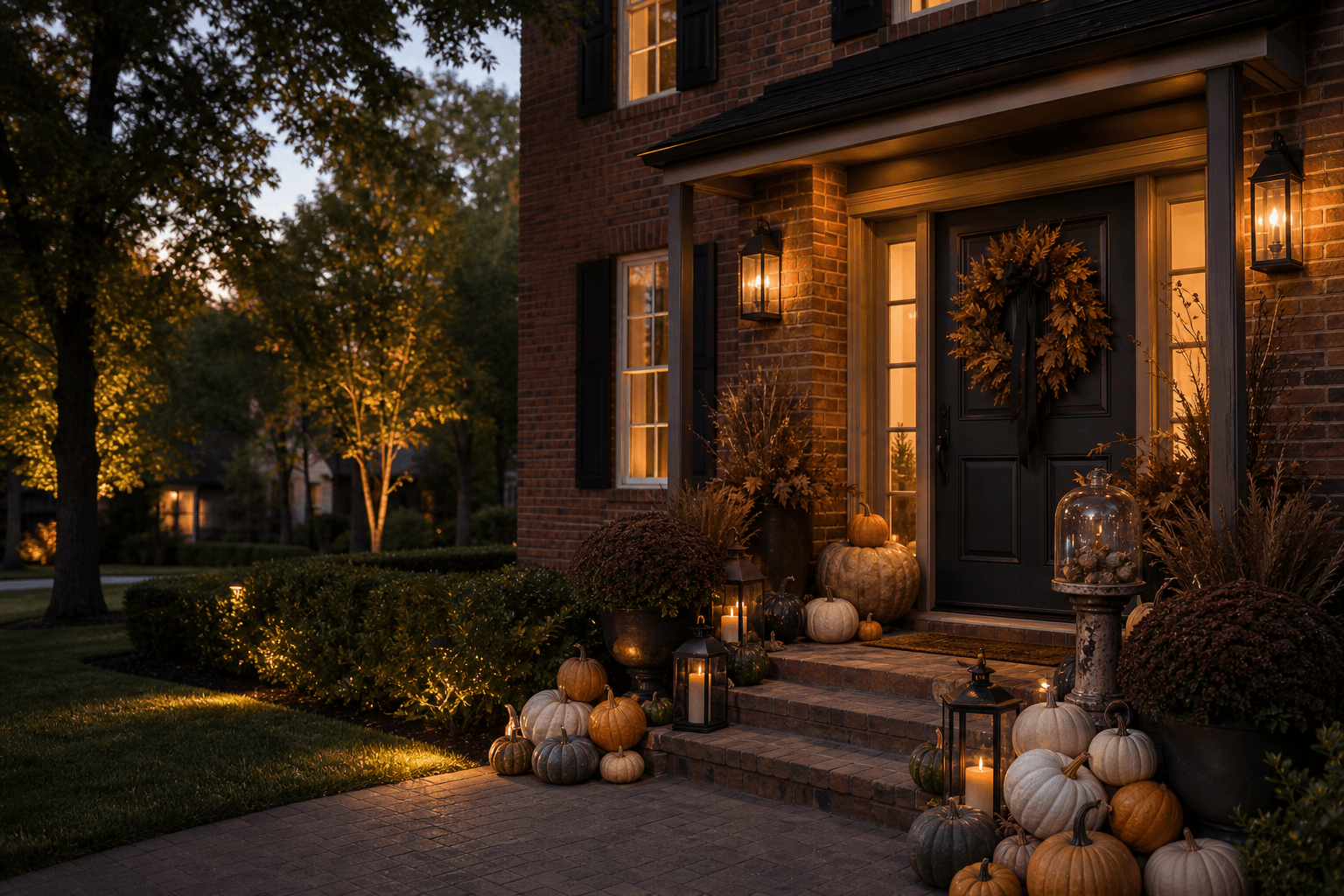
A lush fall wreath with dried wheat, burgundy ribbon, and small gourds. Pull the seasonal accents, add magnolia leaves and cream ribbon, and it reads late autumn into winter. Layer in noble fir, pinecones, and a velvet bow and you're fully into Christmas. The investment is in the base. The seasonal pivot is in the details.
This is how decorators think about it. Buy the canvas once; repaint it as needed.
Garland Has an Architectural Job to Do
Garland placed on a mantel is interior design. Garland placed outdoors is architecture.
Porch columns, entry arches, stair railings, pergola beams, these are structures that garland can activate or define. A pair of columns wrapped in full, lush garland doesn't just add greenery; it frames the entry as a destination. A garland-draped arch tells every arriving guest that something intentional happened here.
The mistake is treating garland as filler between other elements. Outdoor garland should follow the lines of the architecture it's decorating. It should feel like it was designed for that specific structure, not draped over whatever was available.
Density matters here more than length. Sparse garland looks unfinished regardless of how far it runs.
A Note for North Texas Specifically
DFW's climate is not forgiving to fresh elements. Summers are obviously out of the question, but even the "mild" shoulder seasons can surprise, a warm October week in Southlake or Flower Mound will push fresh wreaths past their window faster than expected. High humidity in late spring adds a different kind of stress.
This doesn't mean fresh is off the table for the holiday season. It means fresh should be sourced close to the install date, replaced on a schedule, and selected with North Texas conditions in mind. Boxwood, cedar, and eucalyptus hold up better in our climate than more delicate varieties. If you're relying on fresh elements to carry an extended display, you're fighting the weather instead of working with it.
The Point Is the Impression It Creates
Wreaths and garland are the hardest category to make look non-generic precisely because everyone uses them. The baseline is set. The only way to clear it is through proportion, composition, material quality, and intentional placement, not through spending more, but through deciding more carefully.
An entry that looks designed doesn't happen by accident. It happens because someone considered the door size before buying the wreath, thought about what lives beside it, and chose materials that hold up to scrutiny at close range.
That's the difference between an entry that photographs well and one that actually stops people in their tracks.