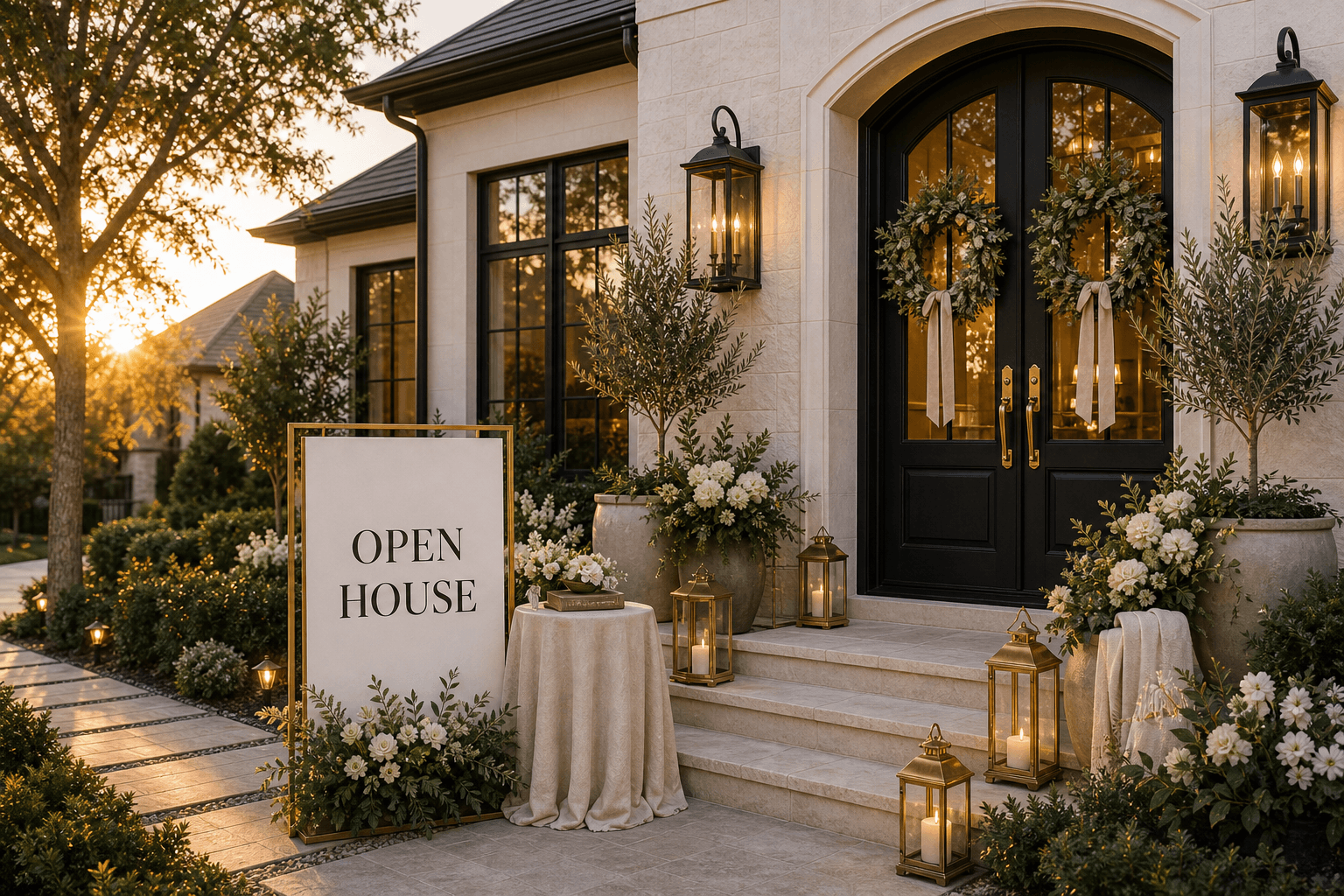
Open House Decor Ideas That Actually Make Buyers Stop
When someone pulls up to your open house, they've already started deciding.
Before they've set foot inside, before they've seen the kitchen, the primary suite, or the backyard, they've registered a feeling. It happens in the first eight seconds or so. And on a street where buyers are visiting four homes in an afternoon, that curb appeal moment is the difference between this one's worth a serious look and let's just do a quick walkthrough.
Most listings don't think about this moment. Here's how to make it work for you.
Think Arrival Sequence, Not Front Door
The most common mistake sellers make is treating the front door as the only thing that matters. In reality, buyers are reading your home from the moment they turn into the driveway.
Think in stages:
The street view. This is your listing photo angle, what people see before they ever visit. Decor needs to be readable from 30 feet. Structural elements like balloon arches, tall greenery columns, or a framed entry read dramatically from the street. Small details disappear.
The approach. As buyers walk from their car to the door, they're scanning. A defined walkway with cohesive plantings or pathway lighting signals intentionality. An undefined path signals neglect.
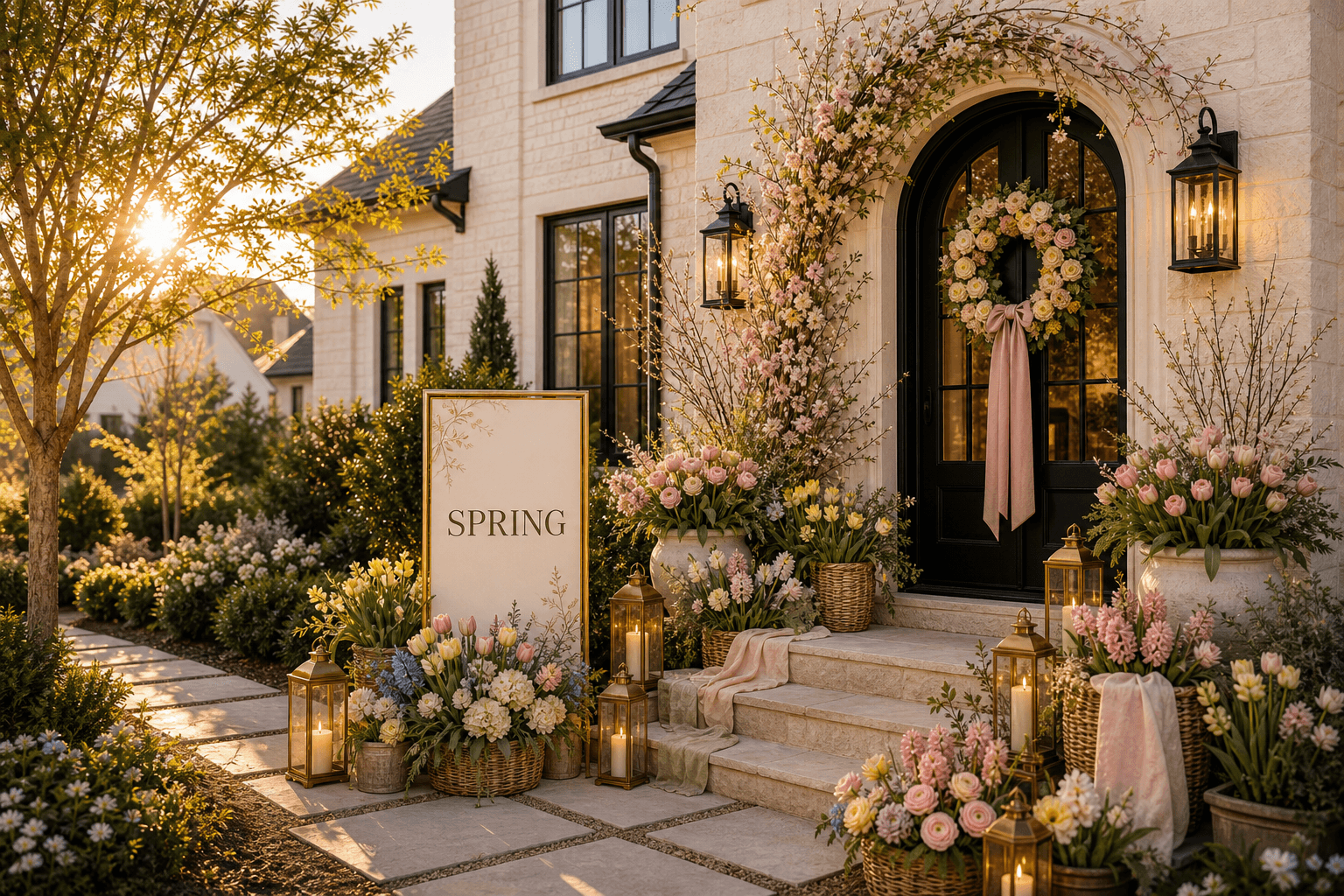
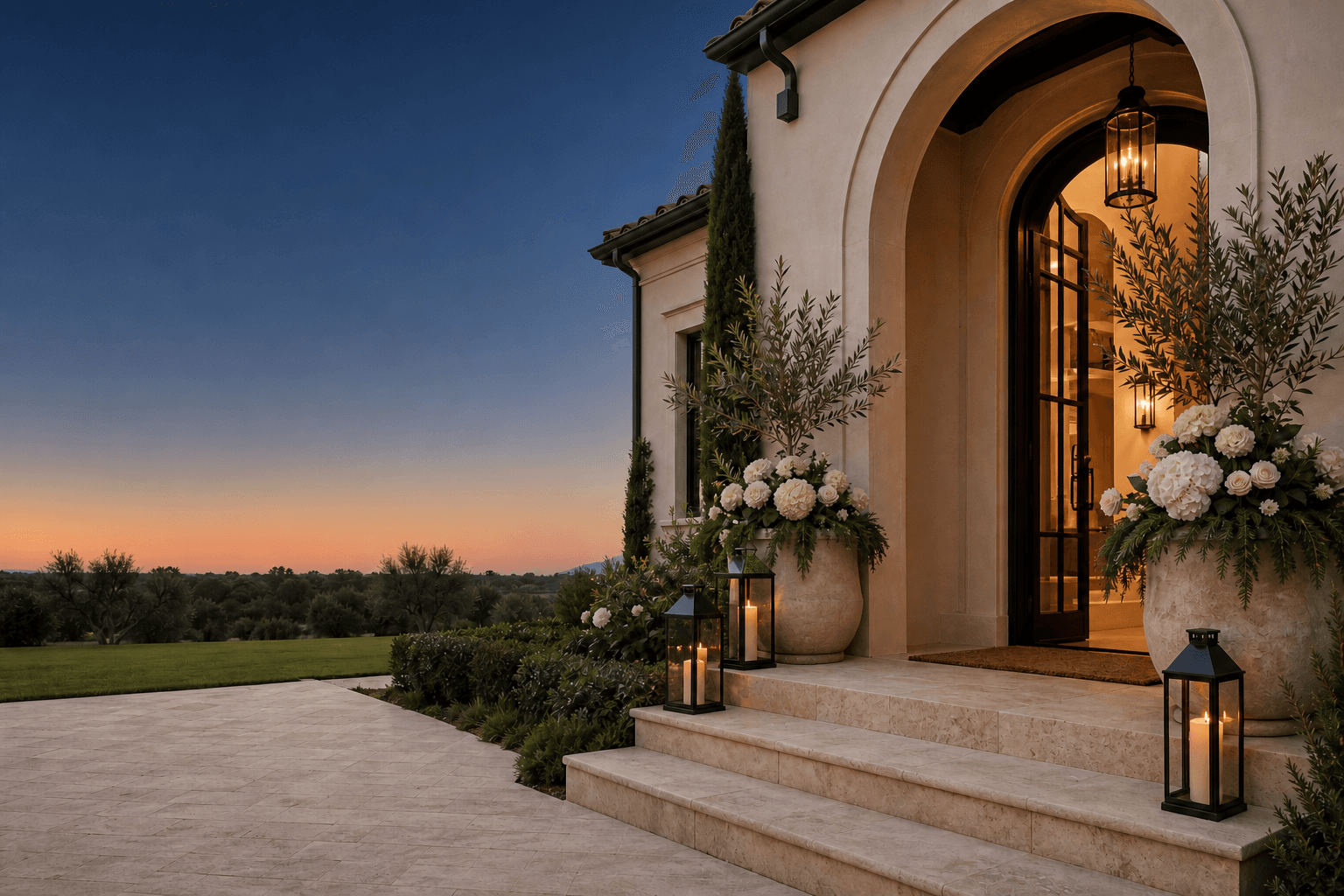
The entry moment. The final few feet before the door. This is where the emotional impression locks in. A symmetrical, finished entry with a wreath, matching urns, and clean sightlines says someone cared about this home.
Design all three stages, not just one.
The Case for Symmetry
There's a reason symmetrical entries feel more expensive. Buyers subconsciously read bilateral balance as a signal of quality and care, it's the same instinct that makes formal architecture feel prestigious.
Two matching planters. Two flanking topiaries. A centered wreath with equal visual weight on either side. These aren't complicated arrangements, but they register as intentional in a way that asymmetric setups don't.
This is especially important for homes where the architecture isn't inherently symmetrical. A well-balanced decor setup can visually correct an off-center door or an uneven facade.
Neutral Palette, Not Neutral Effort
Themed decor, team colors, holiday-specific pieces, personalized monograms, narrows buyer appeal even when it's tastefully done. You're not decorating for yourself; you're decorating for someone who hasn't moved in yet.
The goal is warmth without personality-specificity. That means:
Single-palette setups consistently read as "designed." Mixed colors, even well-matched ones, read as "decorated." There's a difference, and buyers feel it.
Scale to the Structure
A three-story brick colonial and a 1,400 square-foot craftsman bungalow need entirely different approaches. Undersized decor on a large home looks sparse and afterthought-y. Oversized elements on a small home look cluttered and aggressive.
As a general rule: your entry decor should occupy roughly 20-30% of the visual width of your facade from street view. That might mean one large statement arrangement for a modest home, or multiple layered elements for a larger one.
For DFW homes specifically, where a lot of the housing stock runs toward traditional brick and stone with wide garage-forward facades, consider framing the entry door as an architectural focal point. The garage is often visually dominant; your decor should draw the eye away from it and toward the door.
What Photographs vs. What Impresses in Person
Here's something most sellers don't consider: the qualities that make a setup look great in listing photos and the qualities that impress buyers standing in front of the home are not always the same thing.
What photographs well: strong structural shapes, height contrast, clean symmetry, pops of a single color. A tall balloon column photographs dramatically even from a phone camera.
What impresses in person: texture, scent, the sense of scale. A lush garland with real greenery, the fragrance of fresh florals, a pathway that feels considered underfoot.
The best setups do both, they have the structural presence to read in photos and the tactile quality to create a real-world impression. If you have to choose, photograph well first. That's what drives foot traffic to the showing.
One Thing to Avoid
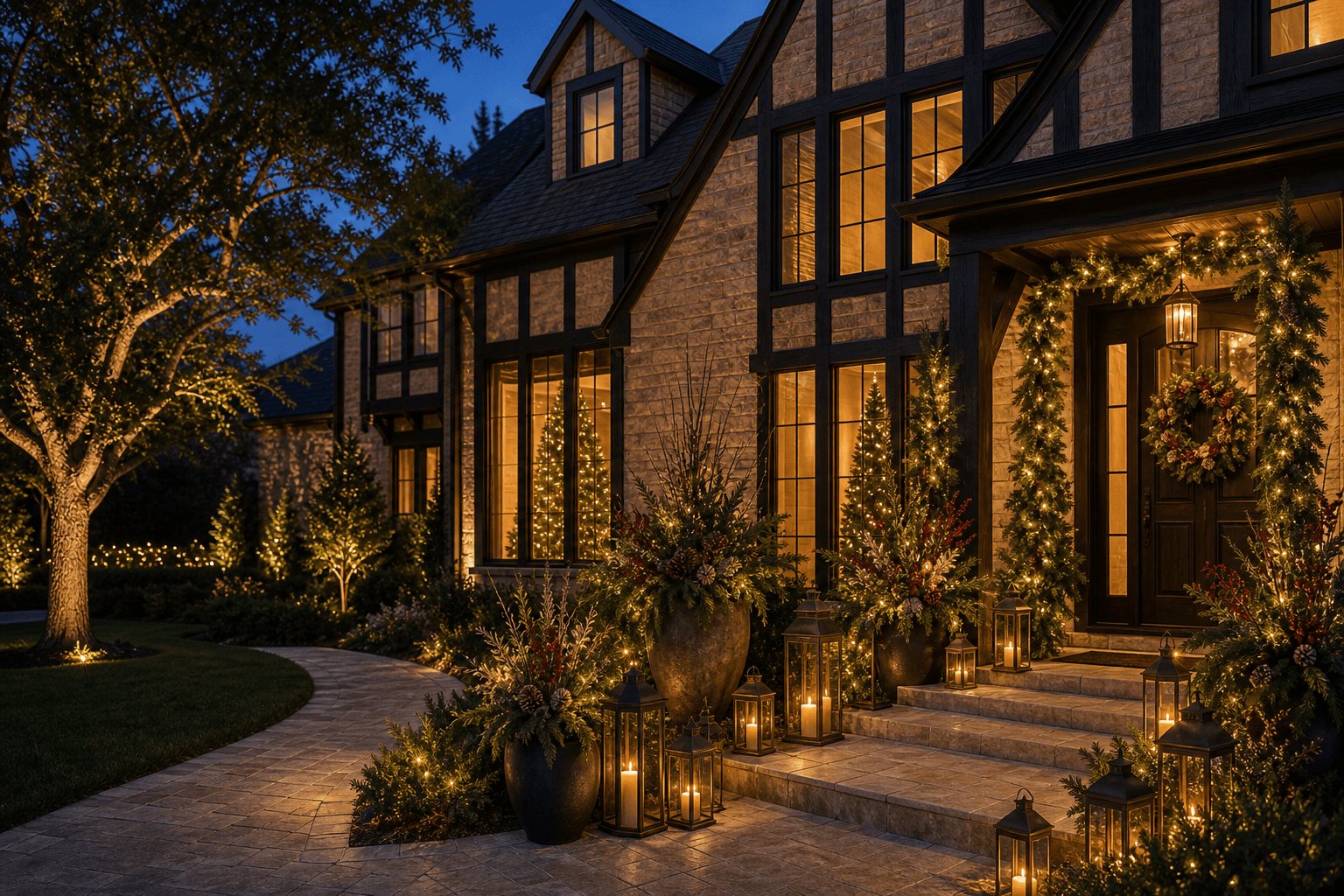
Don't try to decorate for the current season if the season is visually divisive. A Halloween-themed entry, however tasteful, is going to feel odd to a segment of buyers, and it's an unnecessary distraction from the home itself. Same with heavily Christmas-themed setups during winter listings.
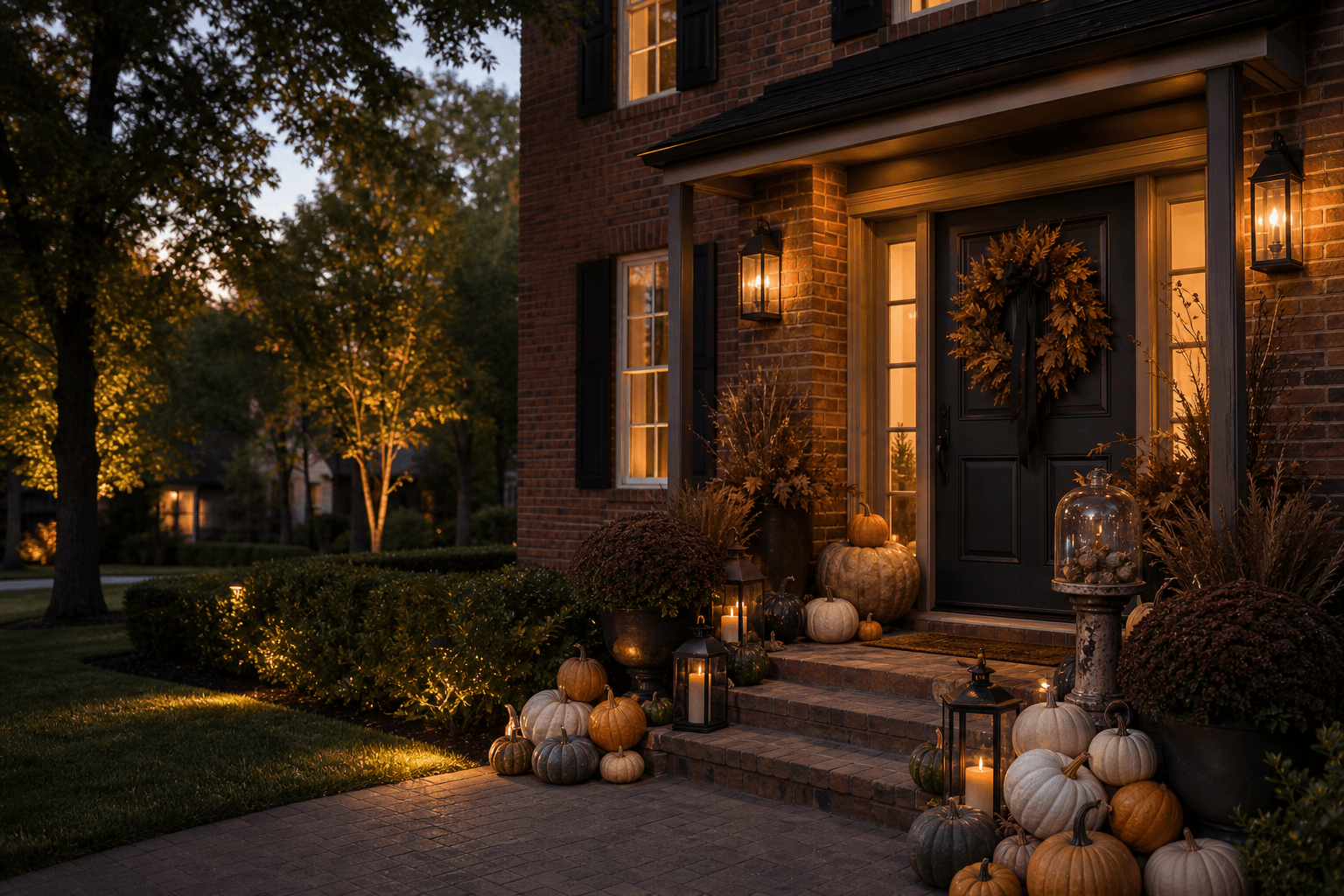
Seasonal warmth without seasonal specificity is the formula. Fall tones and harvest textures in October, yes. Jack-o-lanterns and cobwebs, no.
If you're listing a home in DFW and want a front yard setup that makes buyers stop, we handle everything from design to installation to takedown.