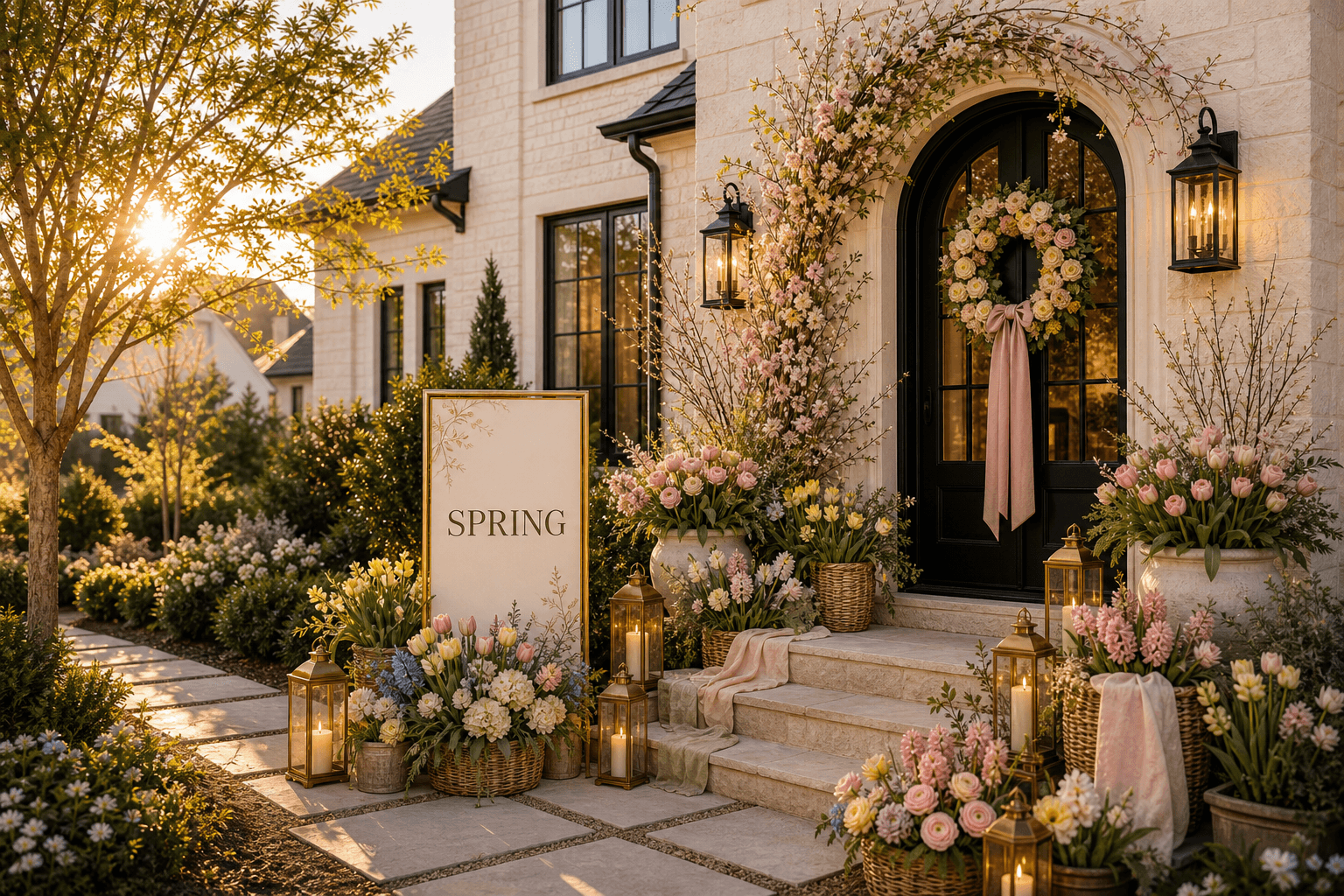
The Anatomy of a Styled Porch
Most porches are decorated. The best ones are composed.
The difference isn't budget, and it isn't taste. It's structural. Six elements show up on almost every porch we ship: anchor, frame, texture, light, negative space, and a single personal detail. When all six are working, the porch reads as styled. When any one is missing, the eye registers it as decorated, even if it can't say why.
The anchor
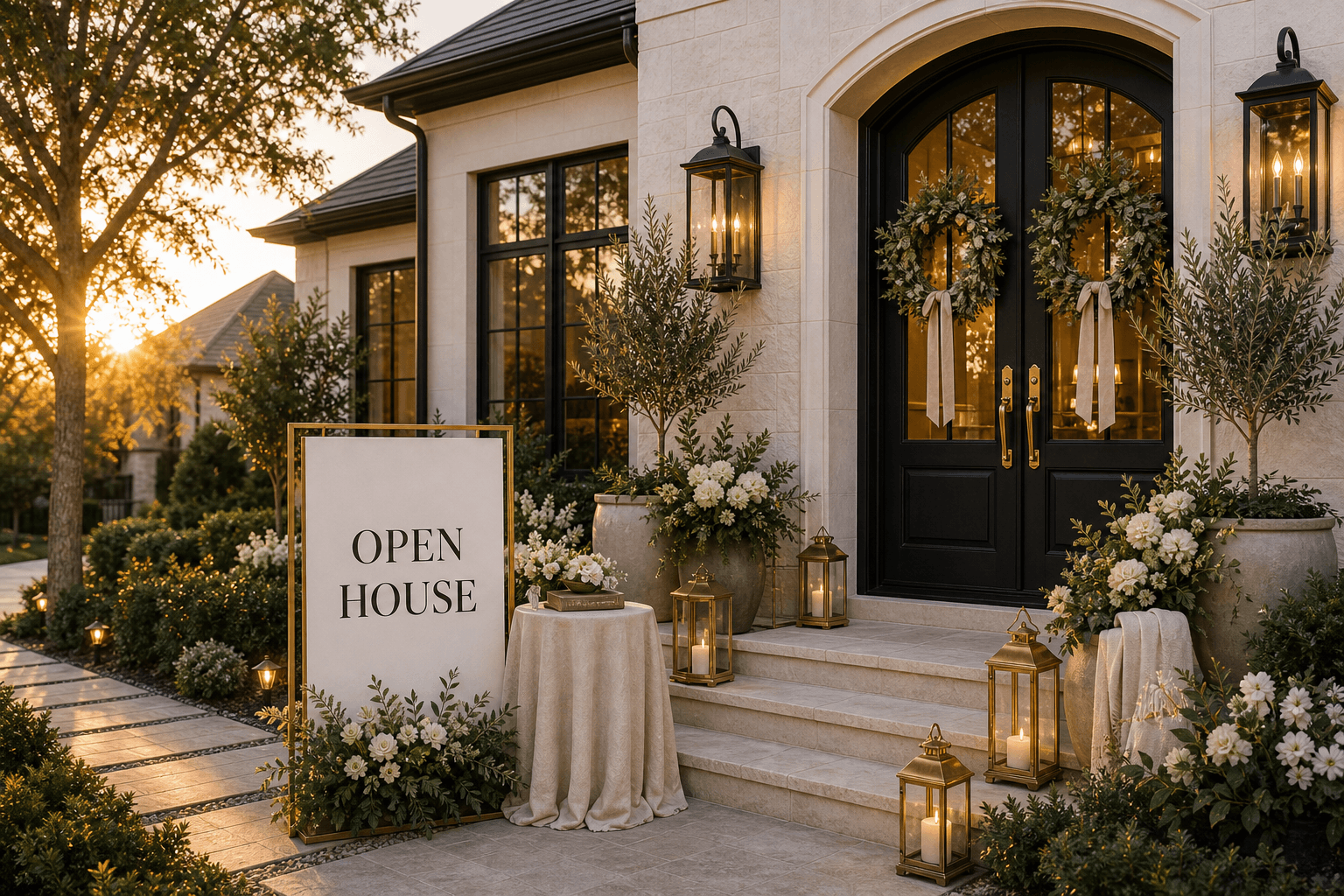
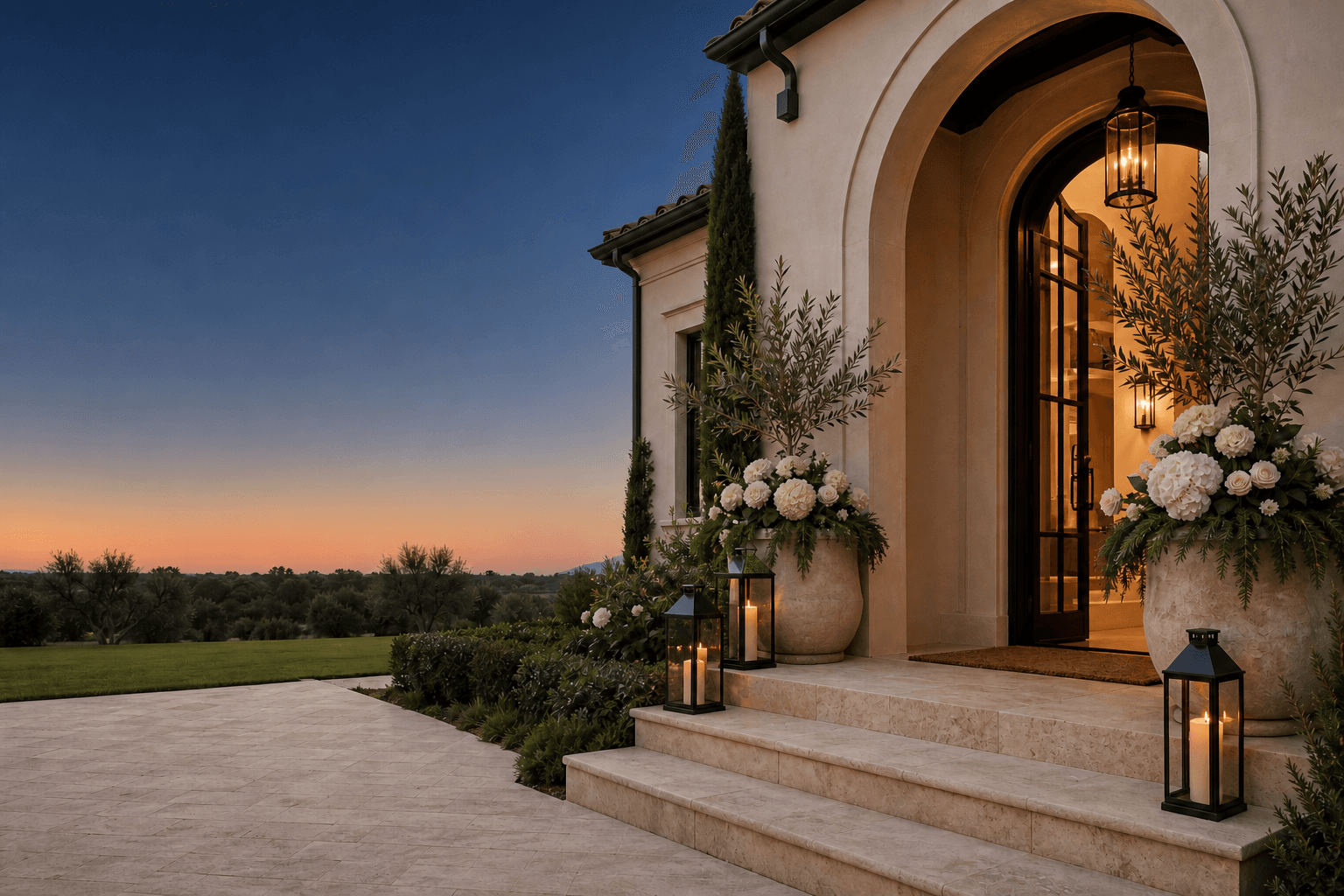
Every styled porch has a single dominant element your eye lands on first. Usually flanking the entry, often paired symmetrically: oversized urns with seasonal arrangements, twin lit lanterns at scale, a wreath sized to the actual door (not the size that feels normal in a store).
If your eye doesn't have a clear first stop, the rest of the composition reads as scattered. The anchor doesn't have to be expensive. It does have to be deliberate, and it almost always has to be larger than feels comfortable up close.
The frame
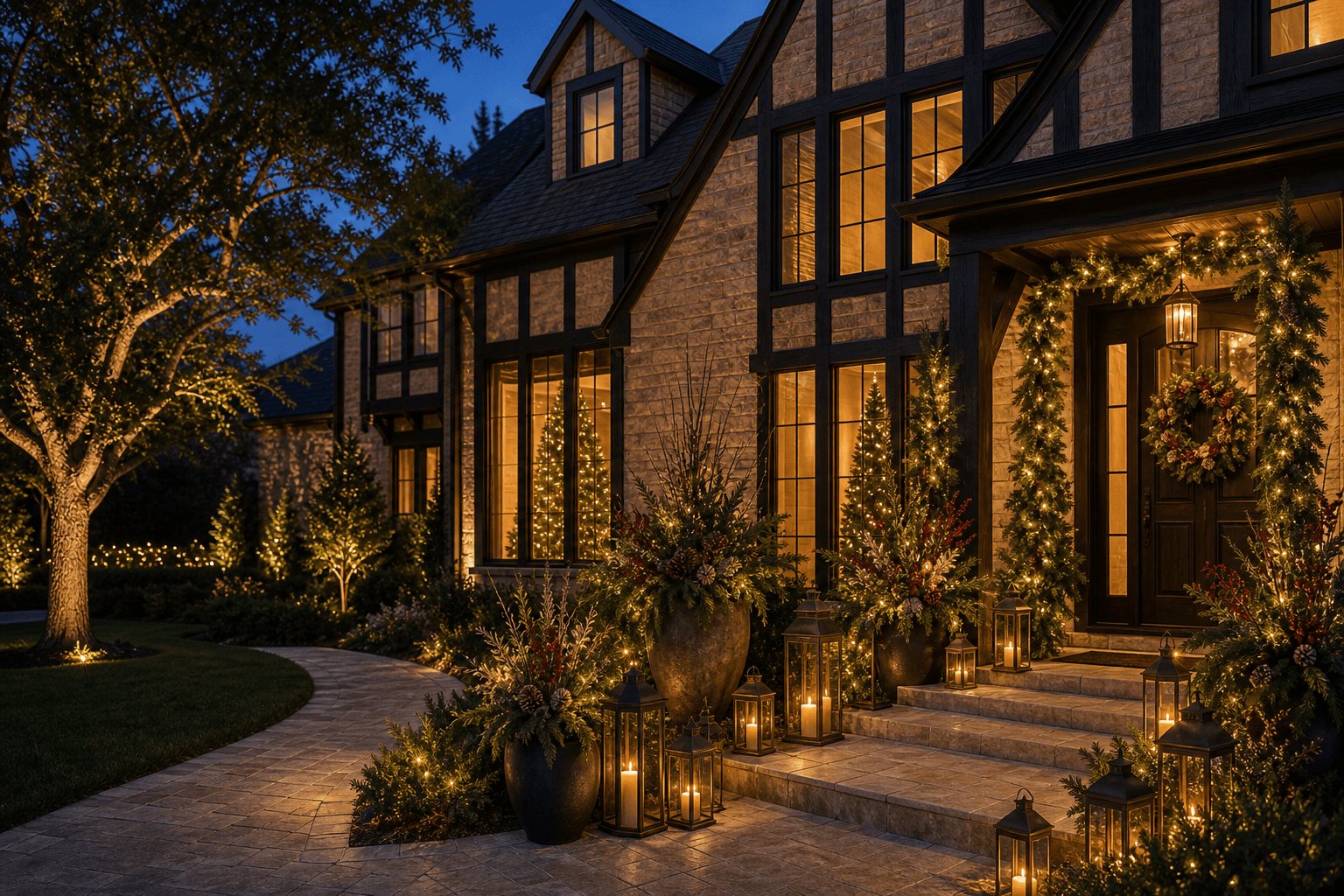
The frame is what bounds the composition: garland on a railing, ribbon on a column, a runner at the threshold. It tells the eye where the styled space ends. Without it, decor floats, and floating decor never reads as a complete composition.
For wide DFW facades especially, the frame matters. A 40-foot porch needs garland that runs the full length, not a wrapped column at each end with a void between.
The texture
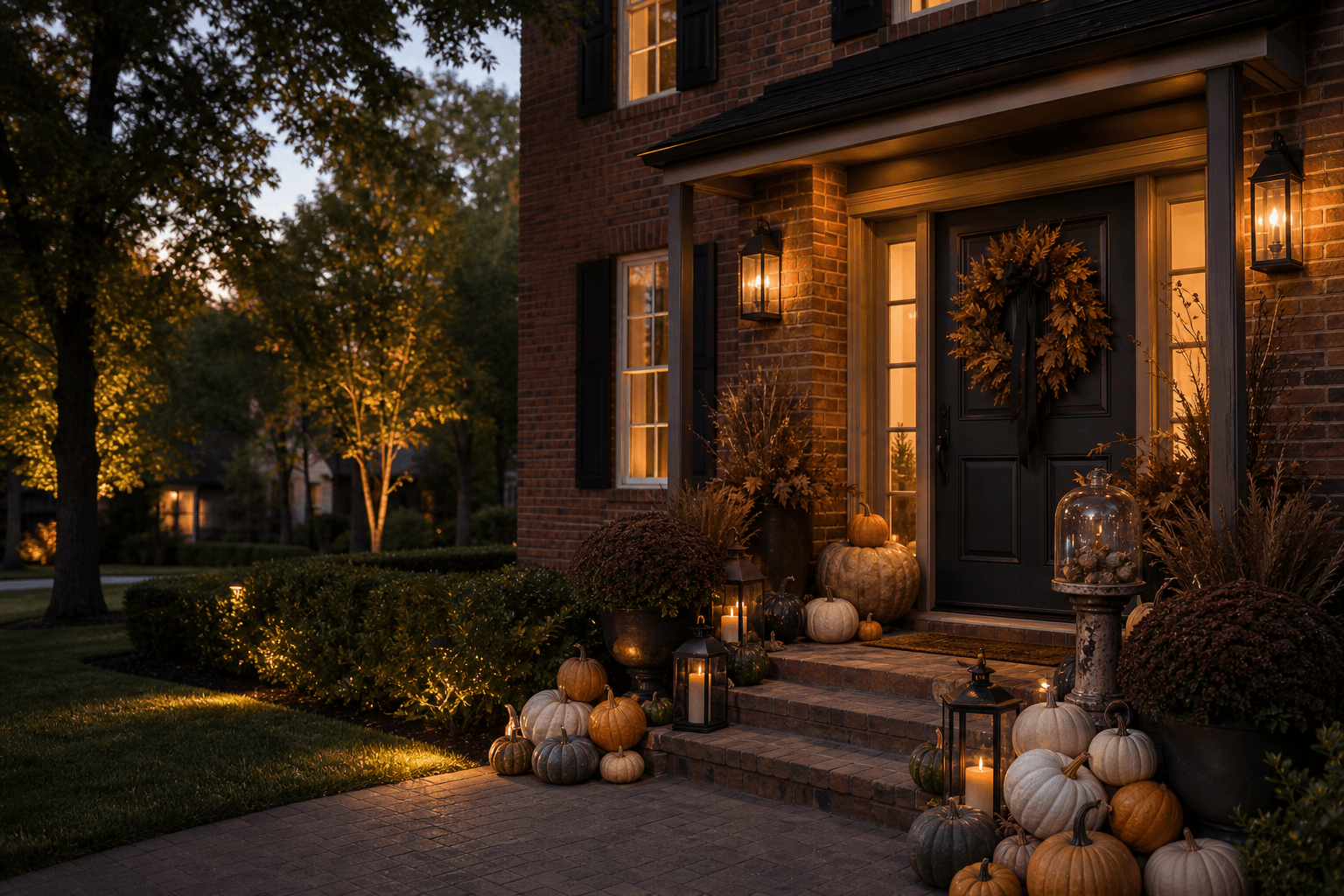
The composition needs at least three material registers working together. Hard goods (lanterns, planters, wreath frames). Botanicals (greenery, florals, dried stems). Textiles (ribbon, runners, bunting). When all three show up, the eye moves naturally between them and the porch reads as layered.
When only one register is present, the porch reads as flat. Plastic-only displays, cutout-only displays, and balloon-only displays all suffer from the same single-register problem.
The light
A porch has two registers: day and night. The styling needs to work in both. Daytime composition is about color and shape. Nighttime composition is almost entirely about light source and placement.
A porch that wins from the curb at noon and disappears at dusk is half-finished. Warm-white lanterns, festoon strands above the entry, candle clusters at the step, all on a dusk-to-dawn timer. The night register is where most DIY work falls apart, and it's where the difference between styled and decorated is most visible.
The negative space
The thing most people don't expect: the space you leave empty matters as much as what you fill. A porch with decor on every available surface reads as cluttered, even when each individual piece is beautiful.
Pick the surfaces that earn decor (the door, the steps, the column bases, the lanterns) and let the rest of the porch stay empty. Negative space gives the styled elements room to breathe.
The personal element
The final thing that separates an installer's porch from your porch: one small, specific detail that ties the styling to the home. The family monogram on the runner. The school colors in the ribbon. The dog's bowl tucked beside a planter.
This is the smallest move and the most underrated. A composition without a personal detail reads as a stylist's portfolio piece. A composition with one feels like the home.
Six elements. When the porch we ship is missing one, we know within thirty feet of the curb. So does everyone else, even if they can't tell you why.