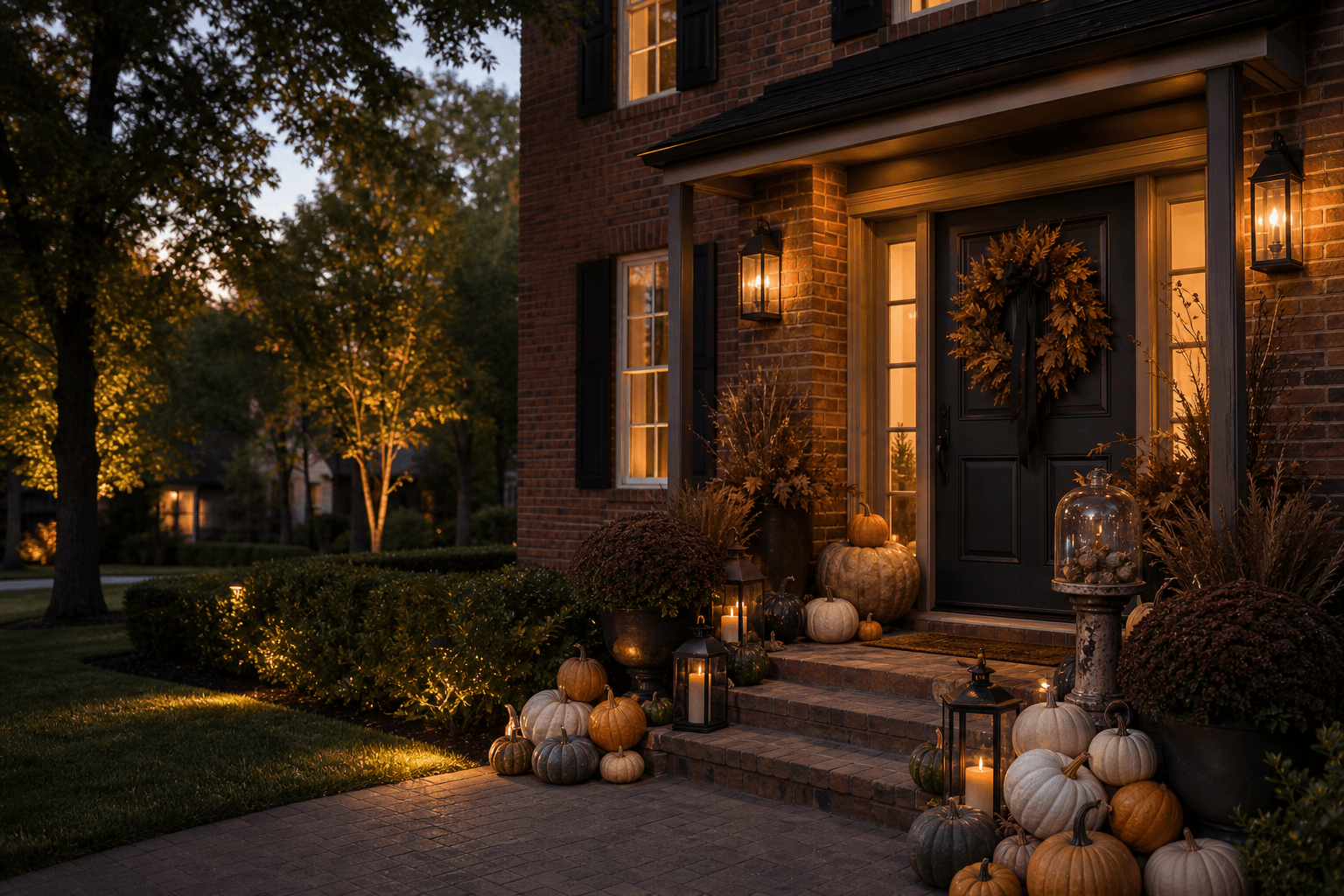
Halloween Front Yard Decor That's Spooky Without Being Cheap
Most Halloween yards aren't spooky, they're just busy.
The plastic skeletons, the blinking orange string lights, the inflatable ghosts competing for the same three square feet of lawn: it all adds up to something that reads as effort without result. The displays that actually make someone slow their car down are never the ones that have the most stuff. They're the ones that commit to a single idea and execute it with conviction.
The Difference Between "Decorated" and "Atmospheric"
There's a spectrum in Halloween decorating that runs from party-store clearance to genuinely unsettling, and most yards land in the middle, cluttered enough to signal Halloween, not focused enough to actually feel like anything. The gap between the two isn't budget. It's intention.
Atmospheric Halloween displays work because they create a consistent sensory experience: a coherent visual direction, a lighting environment, a material palette that feels like it belongs together. When you walk past a yard that actually gives you a chill, what you're responding to is aesthetic unity. Every element is reinforcing the same idea. Nothing is breaking the spell.
Commit to One Direction Before You Buy Anything
The most important decision in Halloween decorating happens before you touch a single prop: choosing your aesthetic register and committing to it completely. There are three primary directions that work at the residential scale.
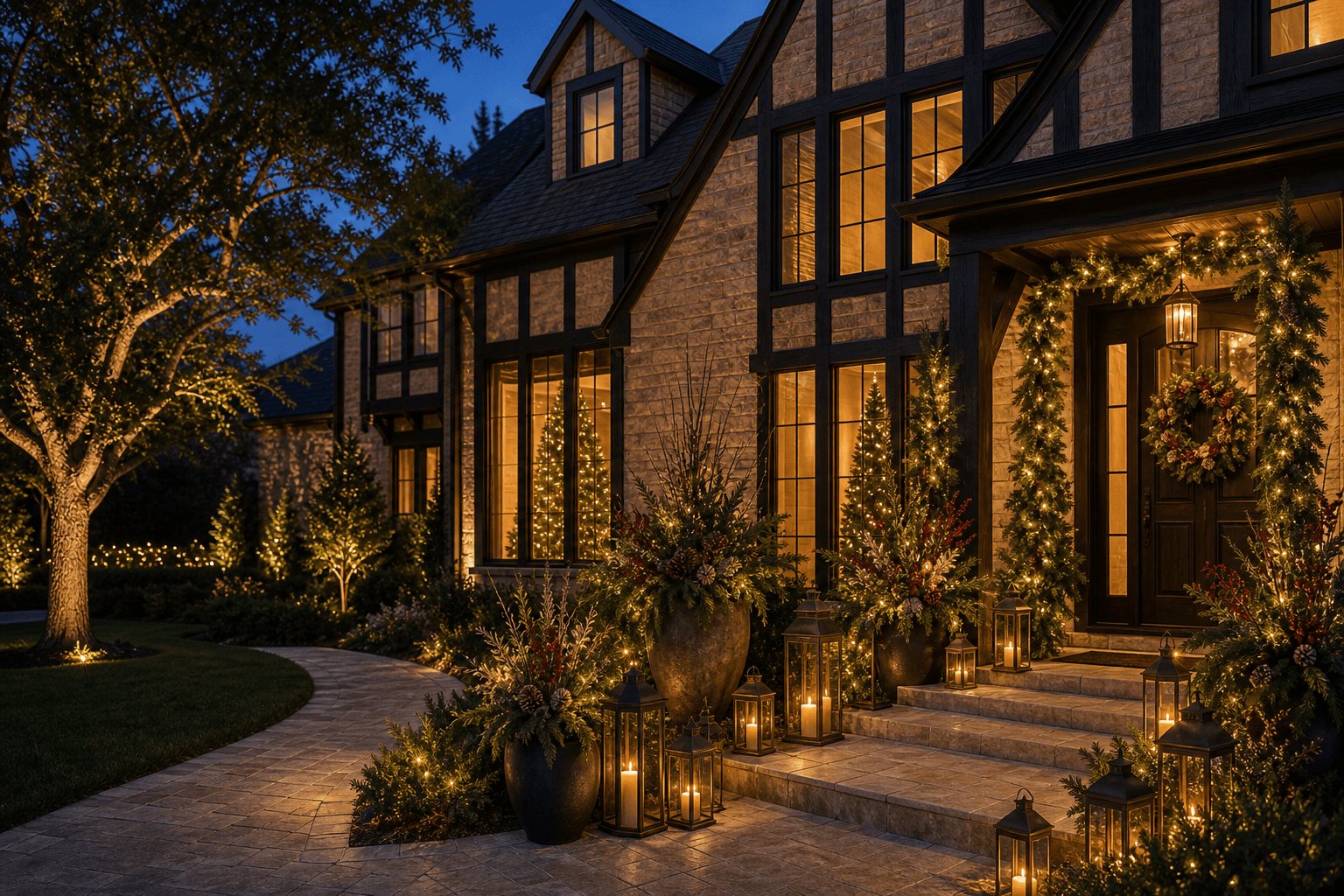
Gothic/elegant leans into architectural drama, black iron urns, stone pedestals, bare-branched topiaries, deep burgundy florals, candle-style lanterns. It reads as haunted estate rather than haunted party. Classic/vintage draws from the mid-century Halloween aesthetic: orange and black, paper lanterns, carved jack-o'-lanterns with candles inside, dried corn arrangements. It's warm and nostalgic rather than frightening. Witchy/natural uses the landscape itself, gnarled branches, black-painted cornstalks, dried botanicals, dark trailing vines, aged terracotta. It feels like something grew there rather than something that was placed there.
Any of these three can look exceptional. None of them work if you're borrowing from all three at once.
Lighting Is Doing More Work Than You Think
Walk through a neighborhood on a dark October evening and count how many houses have any interesting lighting. The ones you actually stop and look at are almost always the ones where someone understood that Halloween is a nighttime holiday, and designed accordingly.
Uplighting is the single highest-impact tool. A few inexpensive ground-mounted spots aimed at trees, the house facade, or large props create depth and shadow that flat ambient light can't touch. Deep amber or cool white uplighting reads as cinematic; avoid colored Halloween-specific bulbs in purple or green, which look cheap at any distance. Fog machines placed low to the ground, especially where the light catches the output, create the kind of atmosphere that photographs and reads from the street. Candle-style lanterns clustered at varying heights along a walkway do more for a gothic or witchy direction than any novelty prop.
What to retire: blinking orange string lights, motion-activated spotlight projectors that throw bats or ghosts onto the facade. Both read as afterthoughts.
Natural Materials Age Better Than Anything Plastic
The materials that read as deliberate in a Halloween display are the ones that look like they could have always been there. Dead branches, particularly large ones with natural curves, placed as flanking elements next to steps or at the edge of a path add height and genuine texture. Black-painted corn stalks are the most underrated prop in Halloween decorating: they're inexpensive, they hold their structure through the entire season, and they have an organic irregularity that plastic alternatives can't replicate.
Dark mums, deep burgundy or near-black varieties, cluster beautifully at the base of arrangements and survive the mid-October DFW weather well once temperatures drop. Dried botanicals, aged gourds in dark color variants, and raw burlap or Spanish moss as filler material all contribute to a palette that feels assembled rather than purchased.
Scale for DFW Homes Is a Real Constraint
A lot of North Texas homes, particularly in neighborhoods like Southlake, Keller, and Flower Mound, have significant setbacks from the street. The front door is twenty, thirty, forty feet from the curb. At that distance, a small skeleton is invisible. A single potted arrangement reads as a dot.
Volume and height are non-negotiable for large-setback properties. This means large-format props (minimum three to four feet of height for anything in the yard proper), multiple groupings rather than one central arrangement, and at least one element that earns visibility at distance, a tall draped figure, a large iron obelisk, a tree wrap with uplighting. If everything is clustered on the porch, it disappears from the street entirely.
The One Thing That Undermines Everything Else
You can have the right lighting, the right materials, and the right scale, and still have a display that doesn't land. The reason is almost always the same: mixing aesthetic registers.
An elegant black urn planted with dark dahlias next to an inflatable ghost. A beautiful arrangement of bare branches and lanterns with a plastic cauldron and a motion-sensor cackling witch perched on the railing. Every out-of-register element tells the viewer that no one made a real decision. It signals decoration as default behavior rather than decoration as craft. The restraint required to leave the inflatable in the garage is exactly what separates the display you remember from the one you don't.
The rule is simple: if an element doesn't belong to your chosen aesthetic direction, it doesn't go out. Full stop.
If you'd rather have someone else handle the sourcing, building, and installation, and make sure the result actually has the atmosphere you're going for, we do this across DFW every October.