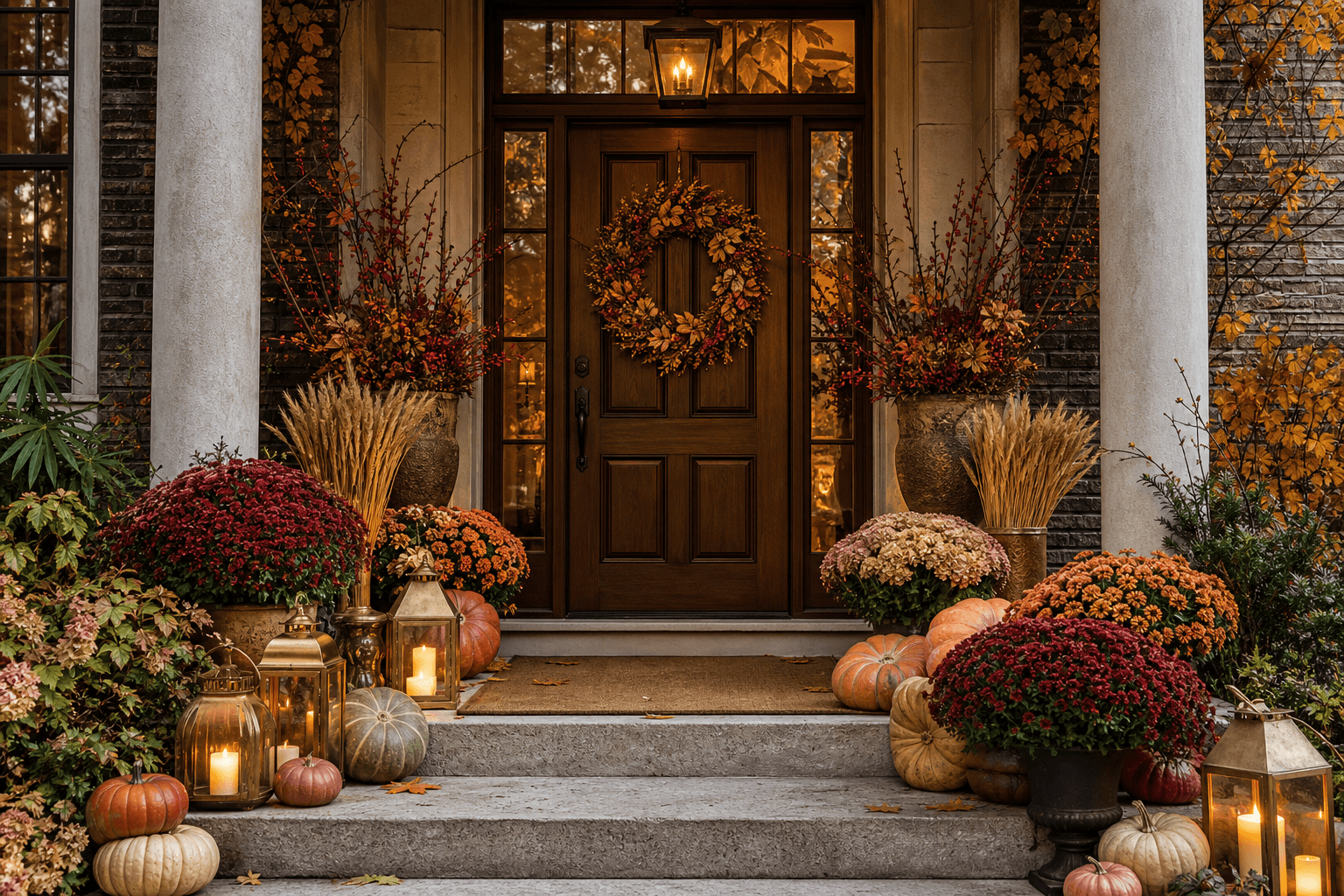
Fall Pumpkin Displays That Look Designed, Not Dumped
Three pumpkins on a porch step don't make a display, they make a pile.
The gap between a front yard that looks designed and one that looks like a last-minute Target run comes down to a handful of principles, none of which require more money. They require more intention. Here's what separates the two.
"Designed" Isn't About More. It's About Relationship
The instinct when decorating is to add. More pumpkins, more mums, more gourds. But professional decorators don't think in terms of quantity, they think in terms of composition. Every element has a job: anchor, mid-point, accent. When something doesn't have a clear role in the arrangement, it makes the display feel cluttered instead of curated.
The first question to ask isn't what should I add? It's what is this display trying to say, and does every piece support that? A cohesive display with five elements reads as designed. A random one with fifteen reads as dumped.
Odd Numbers and Triangular Groupings
There's a reason interior designers default to groupings of three, five, and seven. Even numbers create visual symmetry that the eye resolves too quickly, it registers and moves on. Odd groupings create slight tension that holds attention longer.
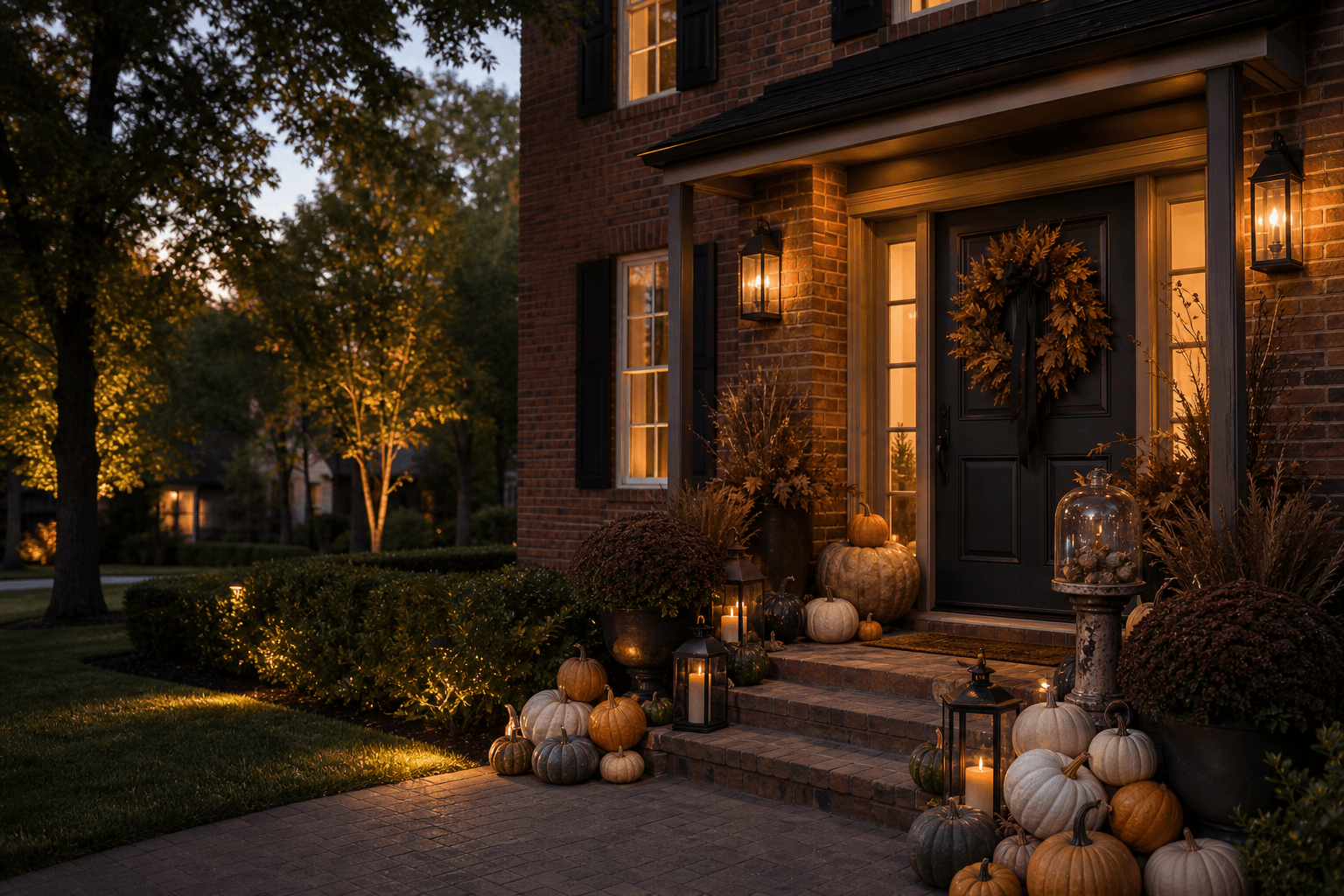
For pumpkins specifically, the most reliable arrangement is a triangular cluster: one tall or large element at the peak, two mid-size pieces flanking at a lower level, and one or two small accents near the base. Your eye travels up and down the composition naturally. This works flanking a front door, anchoring a porch corner, or anchoring either side of a garage entry.
Height Is the Variable Most People Miss
The flattest displays are the ones where everything sits at the same level, pumpkins lined up across a step like a grocery store shelf. What creates visual interest is elevation contrast.
A hay bale is the simplest riser: set one back, stack a large pumpkin on top, arrange smaller gourds around the base. A tall urn or planter works even better, fill it with dried cornstalks, then cluster pumpkins and mums at its feet. If you have a wide porch, a wooden crate or barrel at mid-height bridges the gap between floor-level gourds and a standing arrangement. Three distinct heights, low, mid, tall, make any cluster look like it was put together by someone who knows what they're doing.
The Color Palette Problem With All-Orange
An all-orange pumpkin display looks like the produce section. The fix is subtle but immediate: introduce white and green.
White pumpkins (including the knobbly Casper or flat Flat White varieties) read as sophisticated and provide high contrast against traditional orange. Deep green gourds, especially the long-necked or warty varieties, add an earthy texture that the smooth orange pumpkins can't provide alone. For a bolder look, heirloom pumpkins in Rouge Vif d'Etampes (the flat, ribbed Cinderella pumpkin) or dark blue-green varieties like Jarrahdale shift the entire palette toward something that feels curated rather than seasonal-default.
The formula that works: two-thirds orange-toned, one-third white or green. Enough to read as a fall display, but anchored by a palette decision rather than a produce haul.
Texture Does What Color Can't
Mums are the most underused element in a pumpkin display. A cluster of copper or burgundy mums planted at the base of a pumpkin grouping adds a softness and organic fullness that no gourd can replicate, and the color contrast against orange is immediate. Deep burgundy mums against white pumpkins, in particular, is one of the more striking combinations you can do for almost nothing.
Beyond mums: dried corn stalks tied with jute or burlap create vertical structure and a textural shift from the smooth roundness of pumpkins. Lanterns, even simple black iron ones, add a material contrast that makes natural elements read as intentional rather than found. The goal is that every material in the display feels different from the one next to it.
Texas Fall Has Its Own Timeline
Here's the thing DFW homeowners get wrong every year: putting out a full display in September. North Texas fall doesn't look like fall, not in early September. The heat is still brutal, real pumpkins will rot within two weeks on a warm porch, and mums won't hold up in 90-degree days.
Wait until October. Once temperatures consistently drop into the 70s overnight, real pumpkins last significantly longer (three to four weeks is realistic) and mums will actually thrive. The sweet spot for DFW displays is mid-October through Thanksgiving, which gives you the full six-to-seven-week window when the climate actually cooperates.
What to Skip
Fake plastic pumpkins mixed with real ones is the single biggest display mistake. The materials fight each other, real gourds have irregular surfaces and organic variation; plastic ones are too uniform and too bright. If you want to extend longevity, use artificial elements for height and structure (urns, lanterns, cornstalks), and reserve real pumpkins for the primary focal points.
Overly symmetrical arrangements, matching clusters on each side of a door, perfectly mirrored, tend to read as stiff. Slight asymmetry within an overall balanced composition is what looks designed. Move one element a few inches off-center. Add an accent gourd that breaks the mirror. Symmetry is the starting point, not the finish line.
If you'd rather skip the arrangement math entirely, we handle the whole thing, sourcing, composing, and installing fall displays across DFW. Every setup is built for the specific scale and architecture of your home.